
By the end of this lesson, you should be able to:
One of the key differences between professional punters and casual punters is bet tracking.
In data-driven sports betting, every single bet matters. The more data you collect, the more confident and accurate your analysis becomes.
Bet tracking is the practice of recording every bet you place including the details, odds, stake, and result so you can measure your performance over time.
Think of it as your scorecard as a punter.
Without it, you’re guessing whether you’re profitable or not. With it, you can see patterns, strengths, weaknesses, and make smarter decisions.
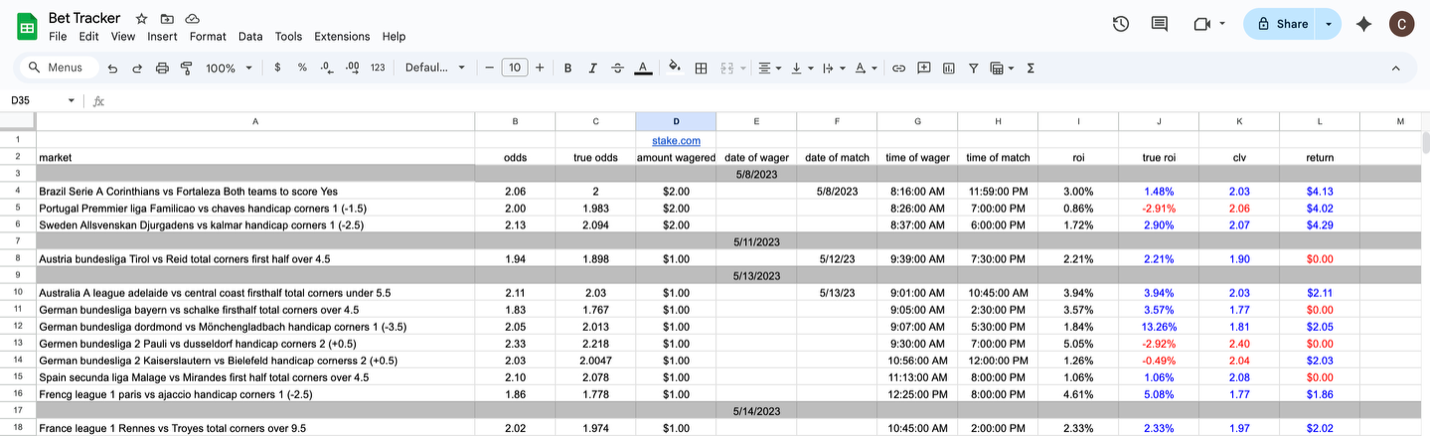
When I first started with data-driven sports betting, I used a simple Google Spreadsheet to log my bets. I began with a $300 bankroll spread over three bookmakers.
Below is a snapshot of my bet tracker for Stake.com:
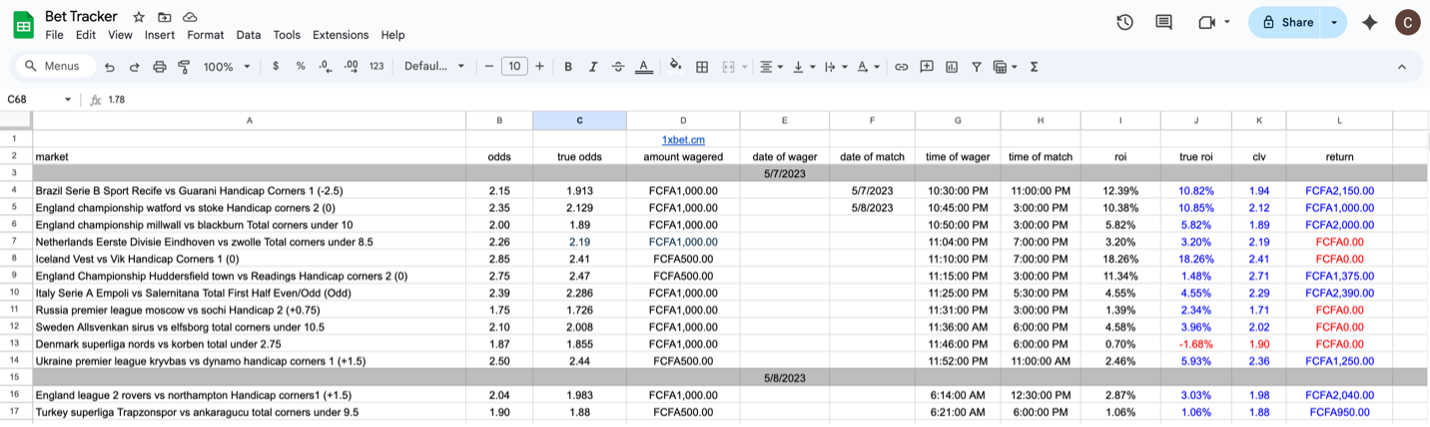
I also used a similar one for 1xBet:
While spreadsheets work, they have some drawbacks:
As you’ll soon discover, time is money in sports betting. ⏱️
Good bets don’t last, and being able to track bets quickly is crucial for productivity.
To solve these challenges, I started using the OddsFantasy Bet Tracker.
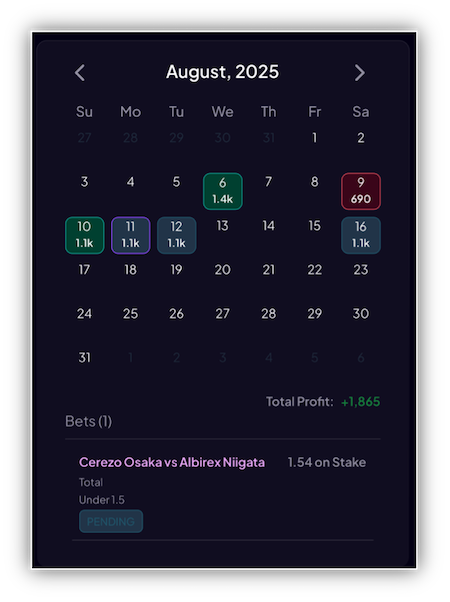
With one click, I can:
This turned a clunky process into a powerful system. ⚡
If you’re just starting out, you must track your bets. How you do it is up to you:
Bet tracking is your foundation for improvement.
Without it, you’re flying blind.
With it, you know exactly:
It enforces discipline, uncovers hidden leaks, and gives you confidence over time.
You’ve now learned how to:
In the next lesson, you’ll put everything into practice. We’ll walk through placing your first bet step-by-step, applying all the knowledge you’ve gained so far.