
By the end of this lesson, you will:
In the previous lessons, you:
But even with a vig, you’re still exposed if someone places an unusually large bet.
🧮 Example: If another punter adds a $50 bet on Tails in your coin toss market,
your total liquidity becomes $250.
If Tails wins, you’ll need to pay out: 1.9 × $150 = $285
That’s a $35 loss, since:
Market Liquidity – Payout = $250 – $285 = -$35
🚨 That’s exactly what you’re trying to avoid as a bookmaker.
There are several ways to manage this risk, but the simplest is through Market Limits.
Bookmakers set a limit on how much a punter can place on a single bet. This is called the market limit. It’s the easiest way to prevent overexposure before it happens. Being “exposed” means there’s a chance you could lose money from your book if the wrong outcome wins. By setting a market limit, you control your maximum risk.
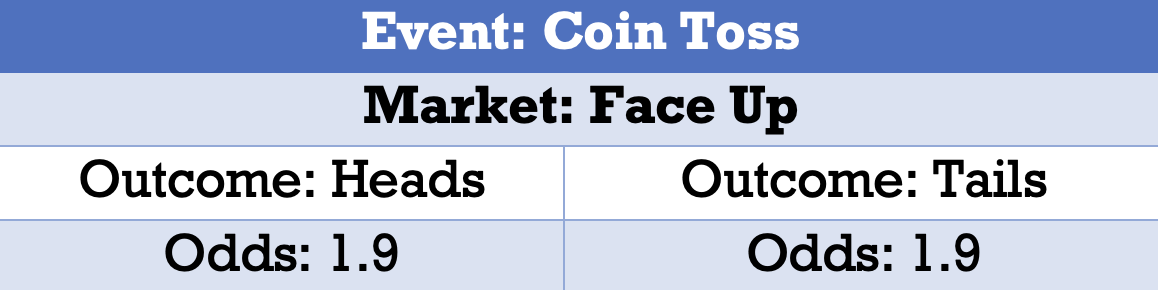
You already have:
Now, another punter wants to place a bet.
You want to guarantee a minimum profit of $6.50 from this market.
Remember:
✅ Based on that, you’ll set your market limit for the next bet at $4.
🎯 Even if Tails win, your profit drops slightly, but you’re still safe.
Compare this to owing $35 if you left the limit open!
✅ See how market limits protect 🛡️ the bookmaker.
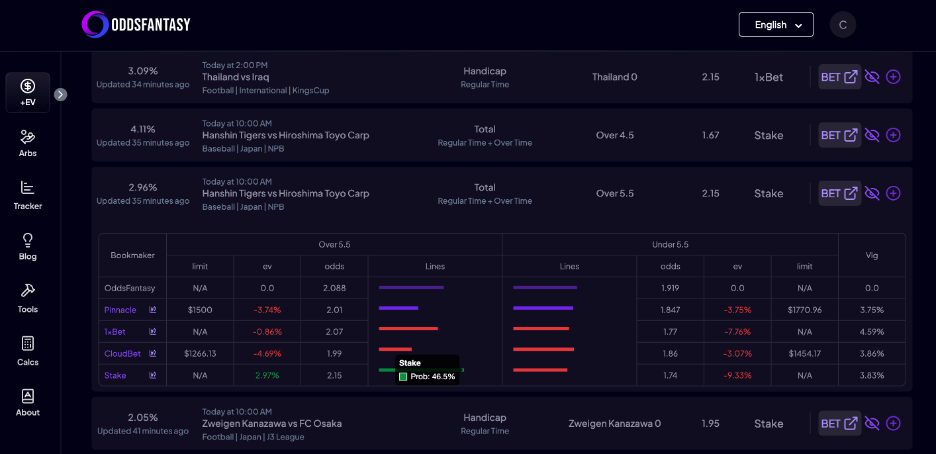
If you look closely at the image above 👆, you’ll see that Pinnacle has set a market limit on both outcomes of this market:
📈 Higher limits = more liquid markets
📉 Lower limits = less liquid markets
In the examples above, you set a small limit of $4 because:
If your market liquidity was $1,000,
Your 5% vig profit = $50,
So you might set a higher limit, maybe ensuring $40 profit minimum.
🔹 Pinnacle sets much higher limits because these markets have greater liquidity, often in the tens of thousands.
So when you see a market with a high limit, it usually means:
You can use this as a signal of how “healthy” or “active” a market is.
In the next lesson, you’ll learn about 📈 Line Movement. How and why odds shift over time. Understanding line movement will help you see: