
By the end of this lesson, you will:
You’ve learned that to maximize your win rate and increase your profit in sports betting, you should only be placing positive expected value (EV) bets. In this lesson, we’ll roll up our sleeves and work through practical examples to truly understand how powerful this strategy can be.
🚨 Notice the term “expected” value.
In practice, it’s what you expect to happen over the long run, not a guarantee of what will happen on a single bet. It’s still a probability, not a promise.
💡 Think of it like this:
You wake up in the morning, and the sky is cloudy. Based on that observation, you expect it to rain. It might not rain that day, but you had a strong reason to expect it. Over time, if you use cloudiness as your indicator, you’ll be right more often than not. Similarly, in betting, you won’t win every single wager, but consistently placing positive EV bets means you’ll come out ahead in the long run. Infact what I just explained closely relates to how weather apps work
Sports betting has two sides:
While you can think of EV here as math, it’s often closer to economics. Thinking like a statistician, weighing opportunities and risks gives you a better chance than thinking only like a mathematician.
To calculate the EV of an outcome, you need two things:
You always know the odds from the bookmaker they’re the ones you bet on.
So, you often just always need to find the true odds.
You can get true odds in two ways:
We’ll start with the first method.
This should feel familiar 👇
This gives your “true” book, with the true odds:
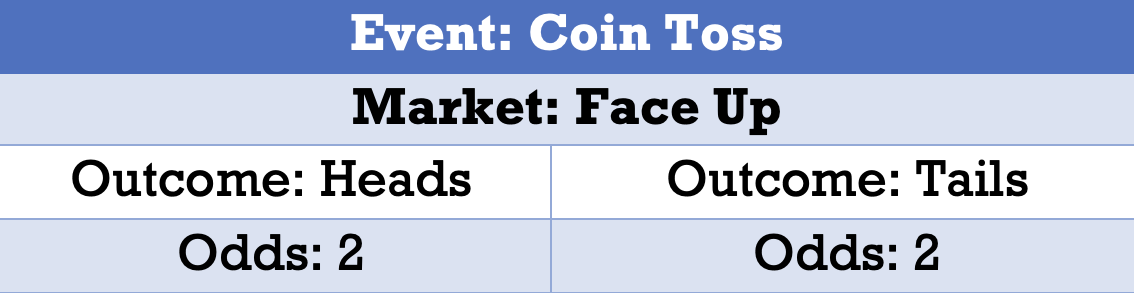
From the bookmaker’s perspective, the book above won’t make money so let’s add a 5% vig and set a market limit of $1 per bet.
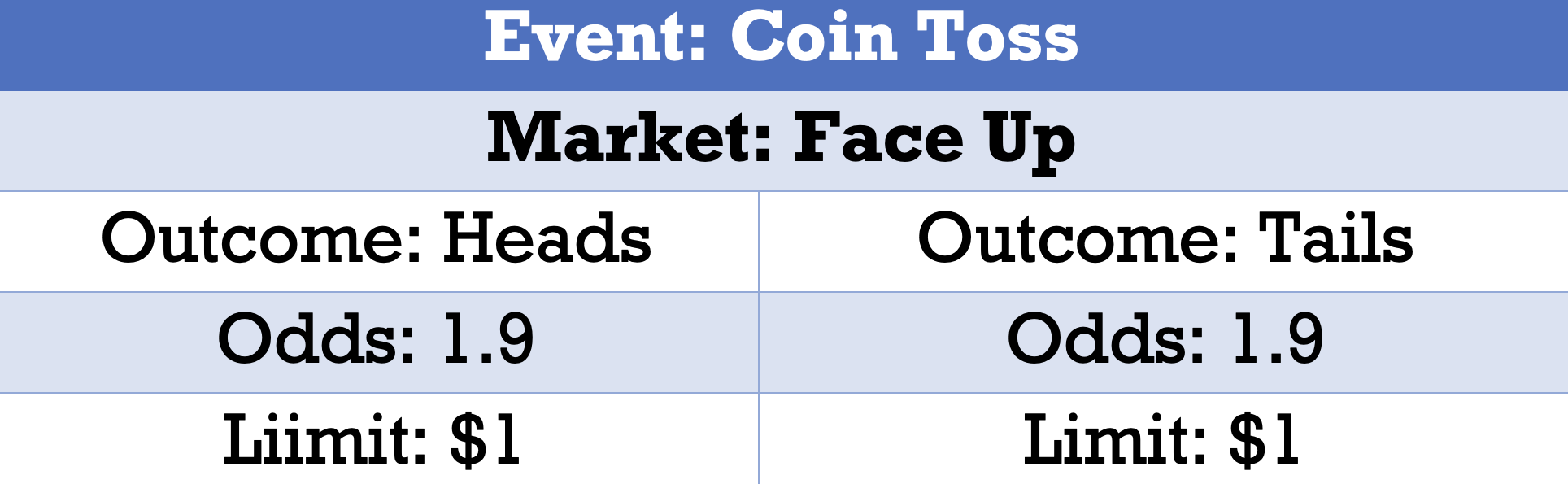
Let’s find out by calculating the EV of a bet on either outcomes using the 🔗 OddsFantasy EV Calculator
Because the odds on all outcomes are equal we can select anyone, it doesn’t really matter. In this case let’s select tails.
Choose Tails:
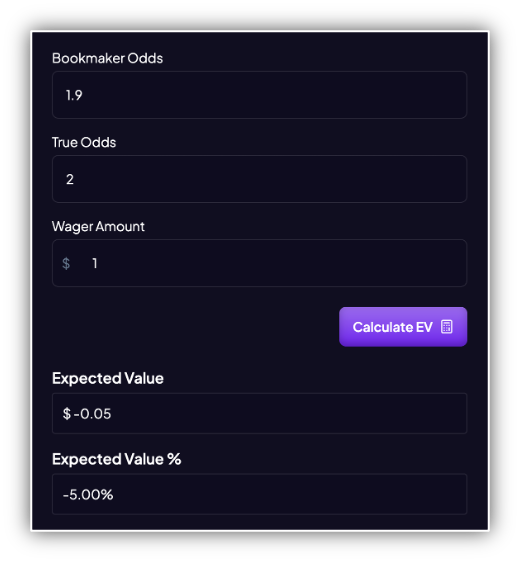
EV = -$0.05
This means that on average, you lose ¢5 (5 cents) per $1 bet over the long run.
🚨 All outcomes have negative EV. So you shouldn’t bet in this market...
Let’s use a different book, for the same event.
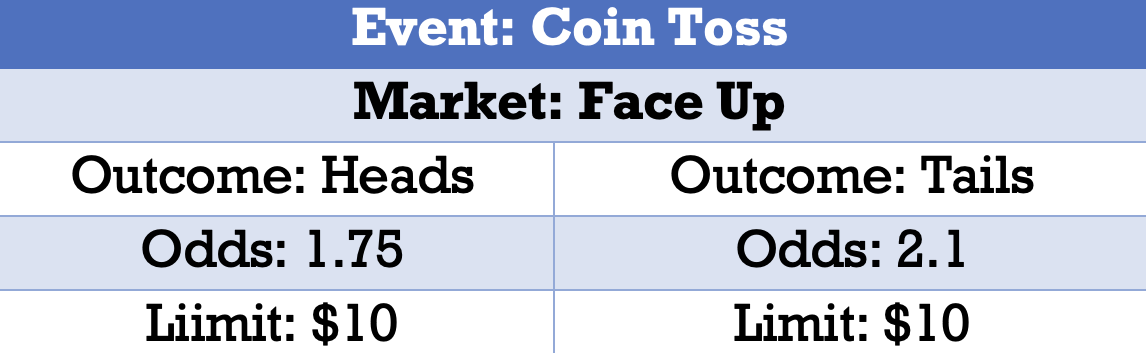
Let’s calculate EV for a $10 bet on both outcomes 👇
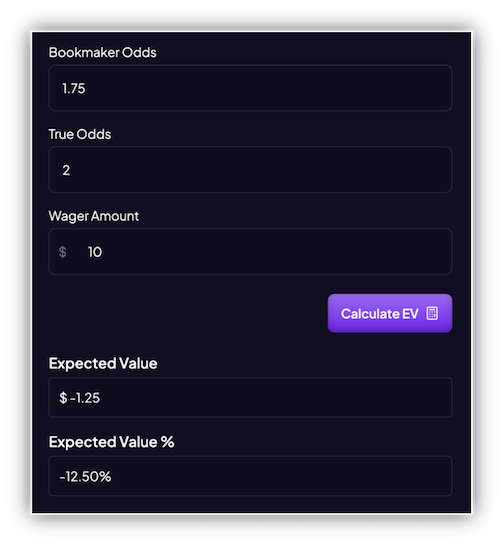
EV = -$1.25
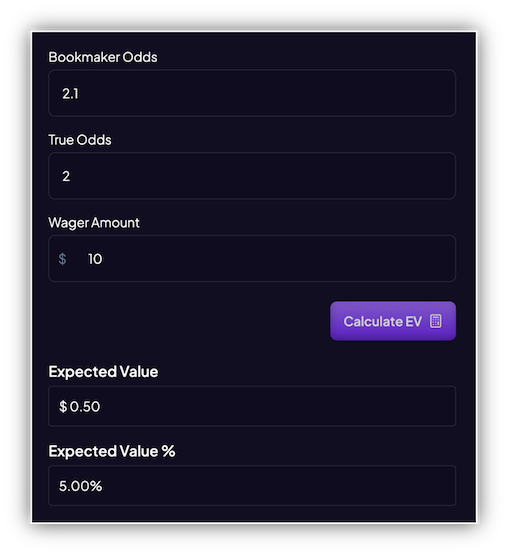
EV = +$0.50
✅ Clearly, betting on Tails at 2.10 is the better choice.
A bet is never complete without its odds.
Any bet can be good or bad, what matters is the odds.
💭 If someone sells you “picks,” always ask at what odds, then check the EV. Most picks sold online are negative EV, and that’s why you’ll lose using them.
You’ve seen how to calculate EV with a simple coin toss. But in real sports markets, calculating true odds is extremely hard.
Luckily, you can shortcut using no-vig odds from sharp bookmakers (e.g. Pinnacle).
Recall that Sharp bookmakers:
Their no-vig odds are a good approximation of true odds.
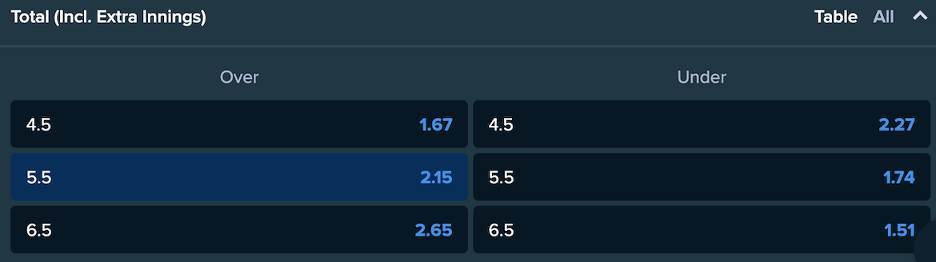
To understand this concept we will use a bet I placed, and walk through the positive ev analysis. This is a $50 bet placed on the total innings market, on the outcome over 5.5, in a baseball match between Hanshin Tigers and Hiroshima Toyo Carp at odds of 2.15. The photo below is a screenshot of the Stake line.
Now check the sharp bookmaker (Pinnacle):
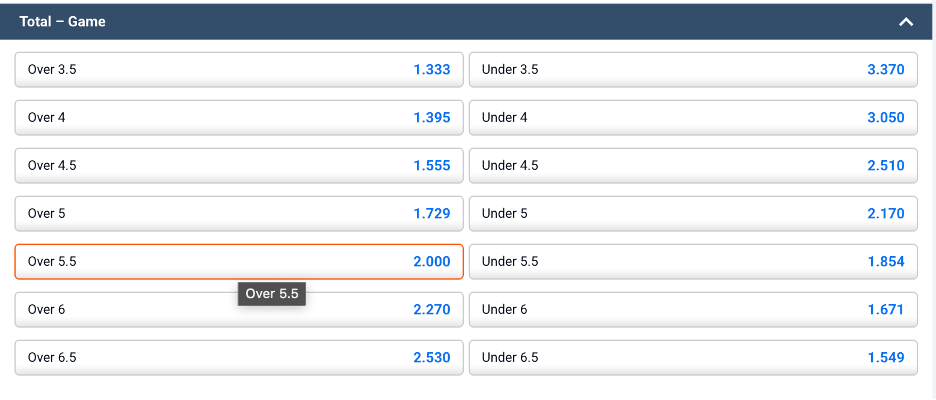
Using the OddsFantasy Vig Calculator, we can find the no-vig odds.
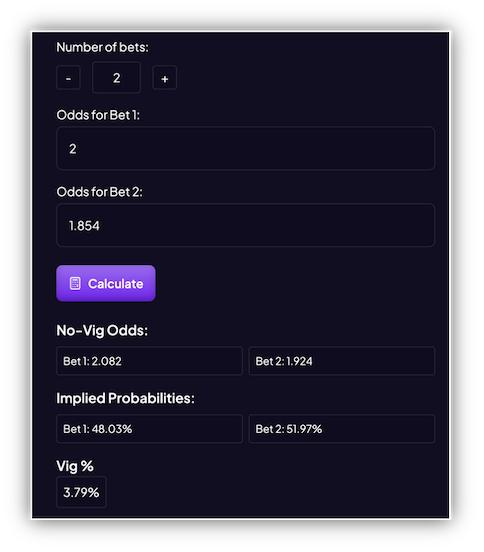
At this point we have a good approximation to the true odds of this maket with the no-vig odds

Now we can calculate the EV of placing a $50 bet on Stake at 2.15 odds using the OddsFantasy EV Calculator:
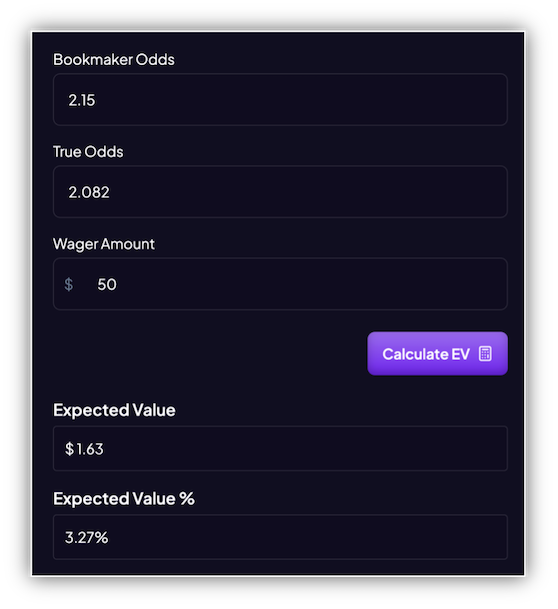
EV = $1.63 or 3.27%
👍 Solid! This gives confidence to place the bet.
While this is enough to place this bet with confidence, there’s one more thing you can do, which is check the line movement. Although there’s value, It is also good to get the best odds, the only way to know that is by tracking the line movements. Lets look at the line movement for this bet.
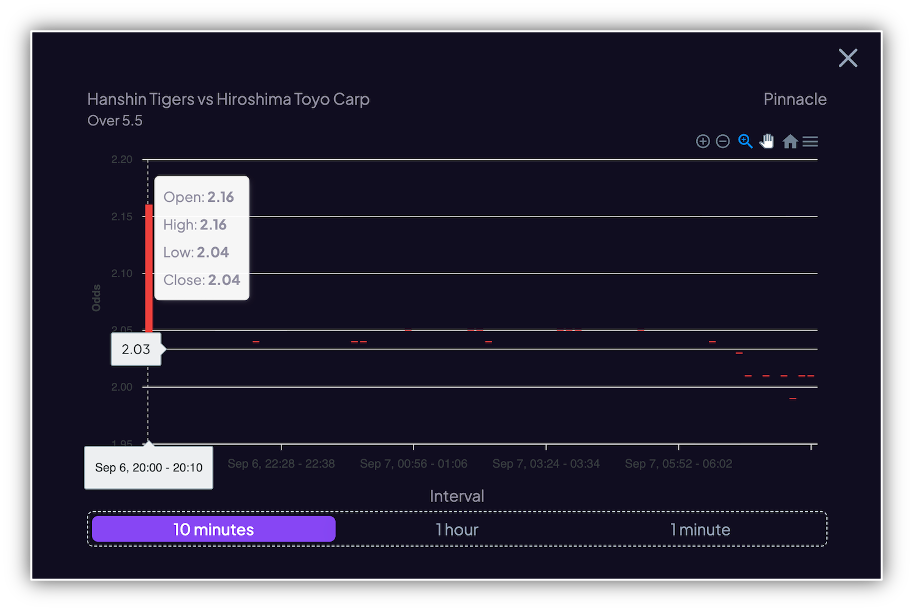
The highest recorded odds are 2.16 and I got 2.15 in a downward trending market, not bad really not bad.
I didn’t randomly choose $50 as the stake, it was calculated. Remember, protecting your bankroll is vital. As a starting rule, avoid staking more than 1% of your bankroll on a single bet. This is conservative and helps you survive losing streaks. We’ll go deeper into this in the next lesson.
Now that you know how to identify which bets to place (positive EV), the next step is learning how much to stake on each bet. In the next lesson, you’ll discover how to manage your bankroll intelligently and size your bets to maximize long-term profitability while minimizing risk.